
Small Batches, Big Margins: Turning Custom Orders Into a New Revenue Stream
For most carpet manufacturers, the small order has always been the awkward one. A customer wants fifty units in a bespoke design, or a single statement rug for a hotel lobby, and the maths just doesn’t work: the cost of making screens, setting up the line, and cleaning down afterwards swallows any profit on a short run. So those orders get declined, padded with high minimums, or quoted at prices that send the customer elsewhere. Digital printing quietly rewrites that maths — and turns the orders you used to turn away into some of your most profitable work.
Why short runs were unprofitable
Under a screen-based model, almost all the cost of a job is front-loaded into setup. Screens have to be made for every colour, aligned, and later stored. The line has to be configured and then cleaned down. Whether you print fifty metres or five thousand, that fixed cost is roughly the same — so on a short run it has nowhere to hide. Spread across few units, it makes each one expensive. That’s why traditional producers chase volume and avoid variety.
How digital flips the model
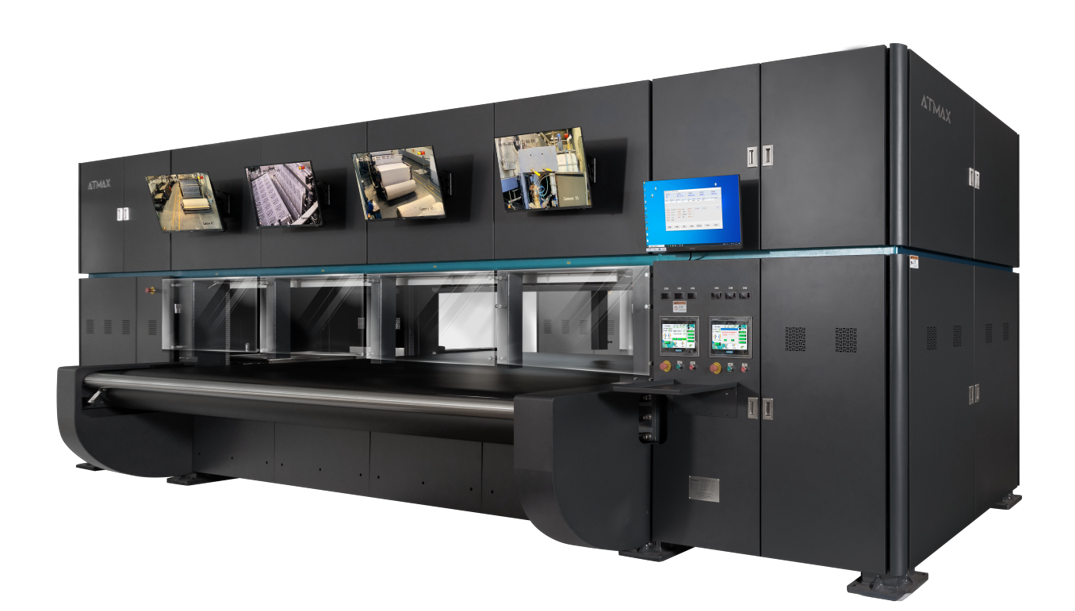
Digital printing removes the setup cost almost entirely. With a system like the VEGA series, changing jobs means changing a file — no screens to make, no paste to mix, no registration to align. The cost of running fifty units is close to proportional to the cost of running five thousand, because there’s no large fixed setup to absorb. That single shift makes small-batch and custom work genuinely profitable for the first time.
The new revenue streams it opens
Once short runs pay, several markets that were previously closed come into view. Bespoke designs for interior designers, architects, and hospitality clients become viable on their own terms. Personalized and branded carpets — corporate logos, event pieces, limited collections — turn into a premium offering. And at the top end, 3D high-definition art rugs create a category with margins that commodity carpet production can’t approach, because few competitors can make them at all.
Each of these is a higher-margin product than standard bulk carpet, and each rewards exactly the flexibility digital printing provides.
A different way to compete
The strategic point is bigger than any single order. Manufacturers locked into high-volume screen printing compete mainly on price, because that’s all an undifferentiated bulk product allows. A producer who can profitably take custom and small-batch work competes on responsiveness and design instead — a far more defensible position, and one that builds direct relationships with designers and brands rather than fighting for shelf space on price alone.
Getting started
The shift doesn’t require abandoning volume work. Digital capacity sits alongside existing production, letting you keep serving large orders while opening a new, higher-margin line for everything that used to be too small to bother with. Often the custom work that was once a nuisance becomes the part of the business that grows fastest.
The takeaway
Small orders stopped being a problem the moment setup costs disappeared. With digital printing, the bespoke, the branded, and the one-of-a-kind become a real revenue stream — and a way to compete on something more durable than price.
Thinking about adding a custom-print line to your business? Talk to the Atmax Africa team about how the VEGA series fits in.