
Why African Carpet Manufacturers Are Switching to Water-Free Digital Printing
The carpet industry has a water problem. Traditional dyeing and screen printing consume enormous volumes of water, produce heavily polluted wastewater, and tie up capital in screens, plates, and storage. For manufacturers across Africa — where water costs, environmental regulation, and energy reliability are all real daily pressures — that model is becoming harder to justify. Digital carpet printing offers a way out, and adoption is accelerating across the continent.
The cost of the old way
Conventional screen printing requires a separate screen for every colour in every design. A single pattern might need a dozen screens, each one made, aligned, used, cleaned, and then stored for possible reuse. Multiply that across hundreds of designs and the result is a warehouse full of screens, a workshop full of setup labour, and a drainage system carrying away thousands of litres of dye-laden water. Every design change means more screens, more downtime, and more waste.
For high-volume producers this was simply the price of doing business. But it punishes exactly the kind of flexibility modern buyers now demand: shorter runs, faster turnaround, and custom designs.
How digital printing changes the equation
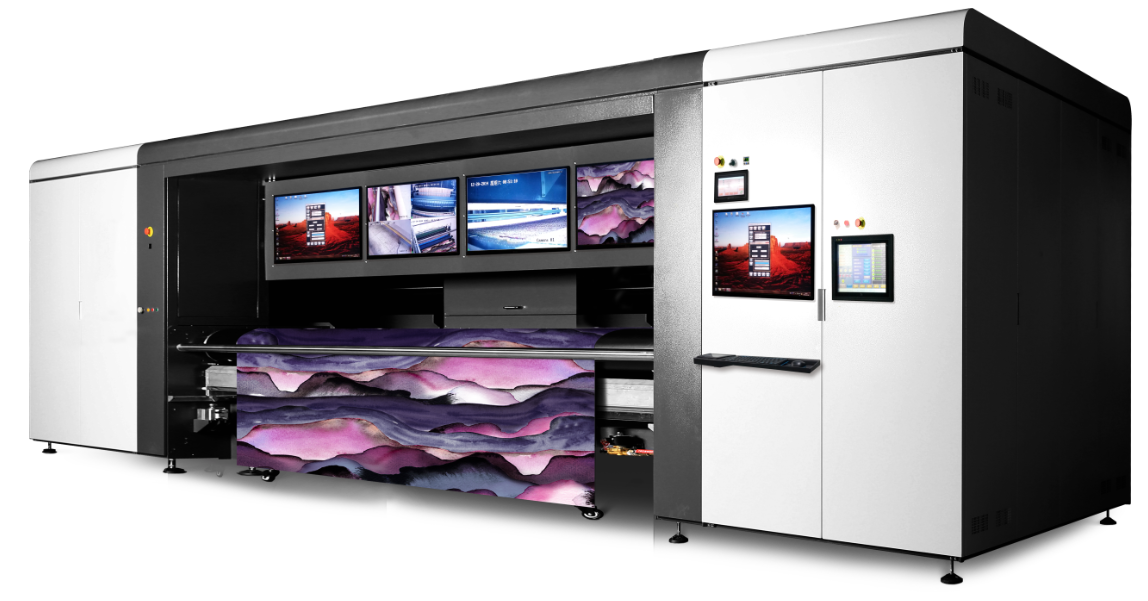
Digital inkjet printing prints a design straight from a file onto the fabric — no screens, no plates, no setup between jobs. With Atmax’s VEGA series, the process goes a step further: on nylon, wool, and dyeable polyester, printing is water-free and wash-free, eliminating the wastewater stream entirely. There are no pattern-repeat limits, no colour-registration errors, and no need to pre-mix colour paste. The machine prints directly, around the clock.
The practical effects show up fast. Changeovers that once took hours now take minutes. A custom order that wasn’t worth running on screens becomes profitable. And the environmental footprint — the single biggest long-term liability for textile producers — drops sharply.
Why this matters for Africa specifically
Three pressures make the case especially strong here. Water scarcity and rising utility costs make any water-free process immediately attractive. Tightening environmental standards mean pollution-heavy methods carry growing regulatory and reputational risk. And a young, design-led consumer market increasingly wants customization and small-batch variety that screen printing can’t deliver economically.
Manufacturers who move early gain a double advantage: lower operating costs and a product range competitors using older methods can’t match.
The bottom line
Water-free digital printing isn’t a marginal upgrade — it’s a different production model. It trades the fixed costs and waste of screens for speed, flexibility, and a clean process. For African carpet manufacturers weighing how to stay competitive over the next decade, it’s quickly moving from “interesting option” to “obvious direction.”
Want to see what digital printing could do for your production line? Explore the VEGA series or request a consultation with the Atmax Africa team.